Some Phoenix neighborhoods are clearly cooling off, but that does not mean Phoenix is emptying out. Far from it. What we are really seeing is a rotation. People are not abandoning the Valley altogether. They are getting more selective about which tradeoffs they are willing to live with.
That pattern shows up fast in the housing market. Listings sit longer. Price cuts start stacking up. Buyers realize that a bigger house or lower price is not always enough if the commute is miserable, the amenities are too far away, or new construction next door is offering better incentives.
When we look closely at Phoenix neighborhoods and surrounding communities, the map starts to make a lot of sense. Some areas are losing momentum because of location friction, inventory pressure, or remote daily living. Other areas are attracting those same buyers because they offer a better balance of convenience, lifestyle, and long-term value.
Table of Contents
- Why Some Phoenix Neighborhoods Are Cooling Off
- 1. Buckeye (Except Verrado)
- 2. Surprise, Arizona
- 3. San Tan Valley, Arizona
- 4. Remote 55+ Communities
- 5. Areas with Heavy Construction
- Where Phoenix Buyers Are Moving Instead
- What This Means for Phoenix Buyers in 2026
- What This Means for Phoenix Sellers in 2026
- Phoenix Housing Market FAQ
Why Some Phoenix Neighborhoods Are Cooling Off
Before calling any area a place people are leaving, it helps to be precise. These are not automatically bad places to live. In many cases, they are cooling first because they have:
- Higher inventory than nearby competitors
- Too much similar product chasing the same buyer pool
- Strong new construction competition
- Tradeoffs that no longer feel worth it once buyers experience daily life there
That last point matters a lot. In the Phoenix metro, the market is incredibly local. It is not just city by city. It is neighborhood by neighborhood, zip code by zip code, and sometimes even subdivision by subdivision.
1. Buckeye (Except Verrado)
Buckeye is one of the clearest examples of what happens when buyers start second-guessing the tradeoff between price and location.
To be clear, we are not lumping Verrado and Victory at Verrado into this conversation. Those communities are in a different category. They continue to attract interest because they offer a stronger sense of place, better amenities, and a more intentional neighborhood feel.
The broader Buckeye story is different.
The first issue is distance. Buyers get out there, love the square footage, love the newer homes, and then start imagining everyday life. A random dinner in Scottsdale can easily turn into more than an hour in the car. Regular errands, healthcare access, nightlife, and even simple weekly routines start feeling less convenient than expected.
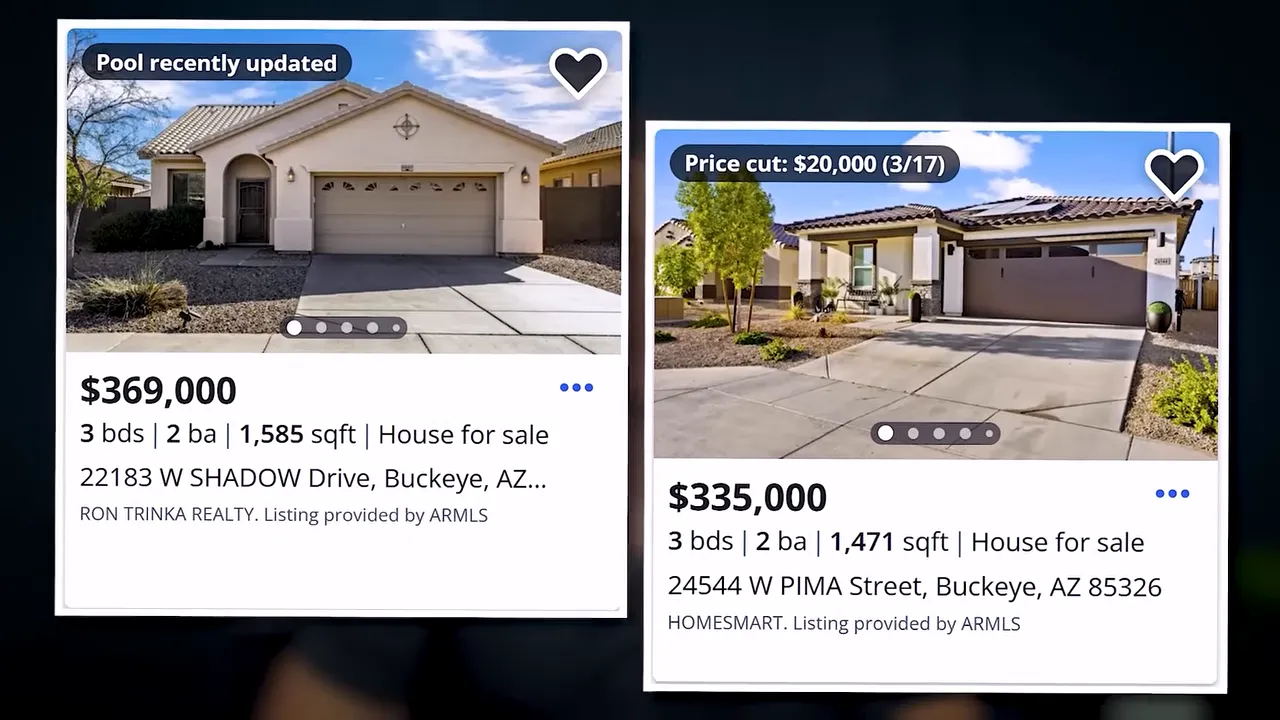
The second issue is competition. When a buyer searching under $400,000 can choose from hundreds of homes, many of them brand new, there is very little pressure to move quickly. Buyers can wait. They can negotiate harder. They can compare every option. And sellers have to work much harder to stand out.
That is the formula for a softer market. More similar listings. More buyer leverage. More pressure on resale sellers.
This is one of the big themes running through a lot of Phoenix neighborhoods on the outer edges of the metro. It is not that the homes are bad. It is that the convenience gap becomes much more obvious when the market is no longer overheated.
2. Surprise, Arizona
Surprise has long been attractive for affordability, family-friendly living, and strong retirement community options. It is still a very livable city. But the market has shifted in a way that is hard to ignore.
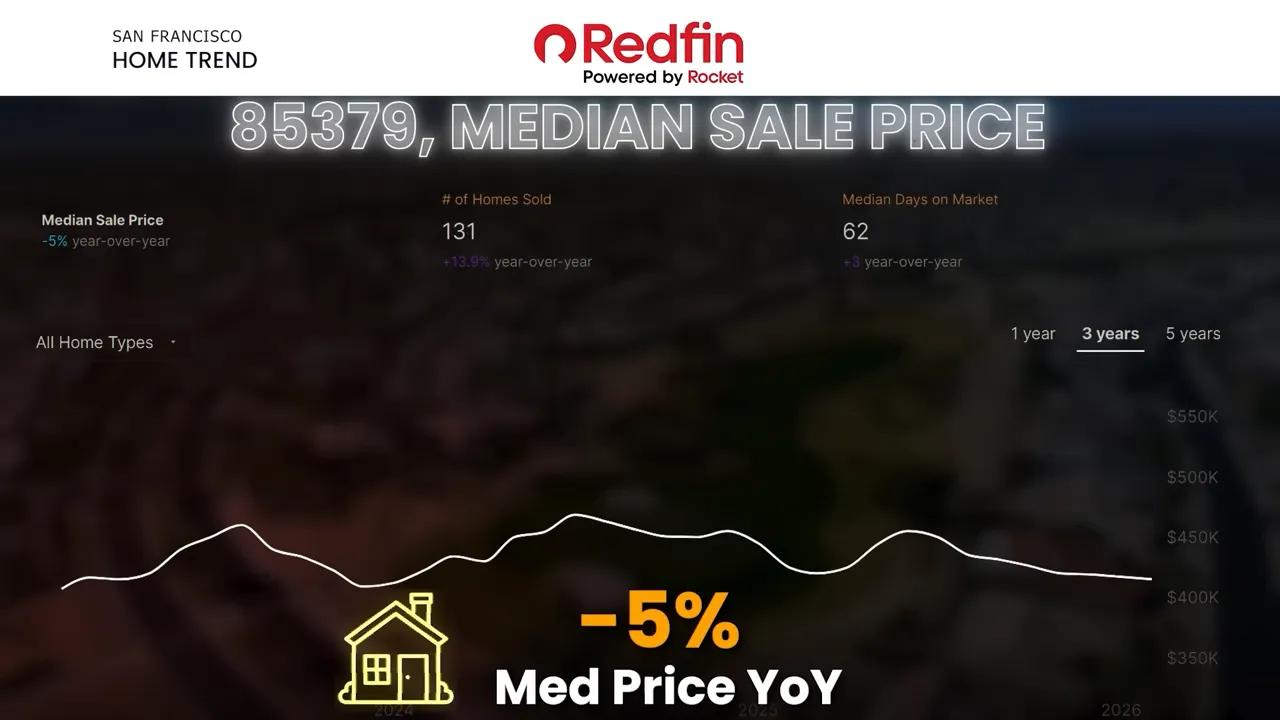
The area has been moving more clearly toward a buyer's market. Median pricing has softened year over year, and homes are taking longer to sell. In certain zip codes, the price drop is even more noticeable.
At the same time, not every pocket is behaving the same way. Areas like Sun City Grand, Marley Park, and Sterling Grove are holding up better and continue to attract demand.
That is why broad labels can be misleading. When people talk about Phoenix neighborhoods and suburban markets around Phoenix, they often miss how hyper-local everything really is.
What is happening in Surprise is that buyers still interested in the West Valley are becoming more selective. They are no longer settling quickly for whatever checks the basic boxes. They are comparing more communities, asking for more concessions, and resisting overpriced listings.
For sellers, that means a home that is merely decent may sit. For buyers, it means there is room to negotiate if they understand the specific pocket they are shopping in.
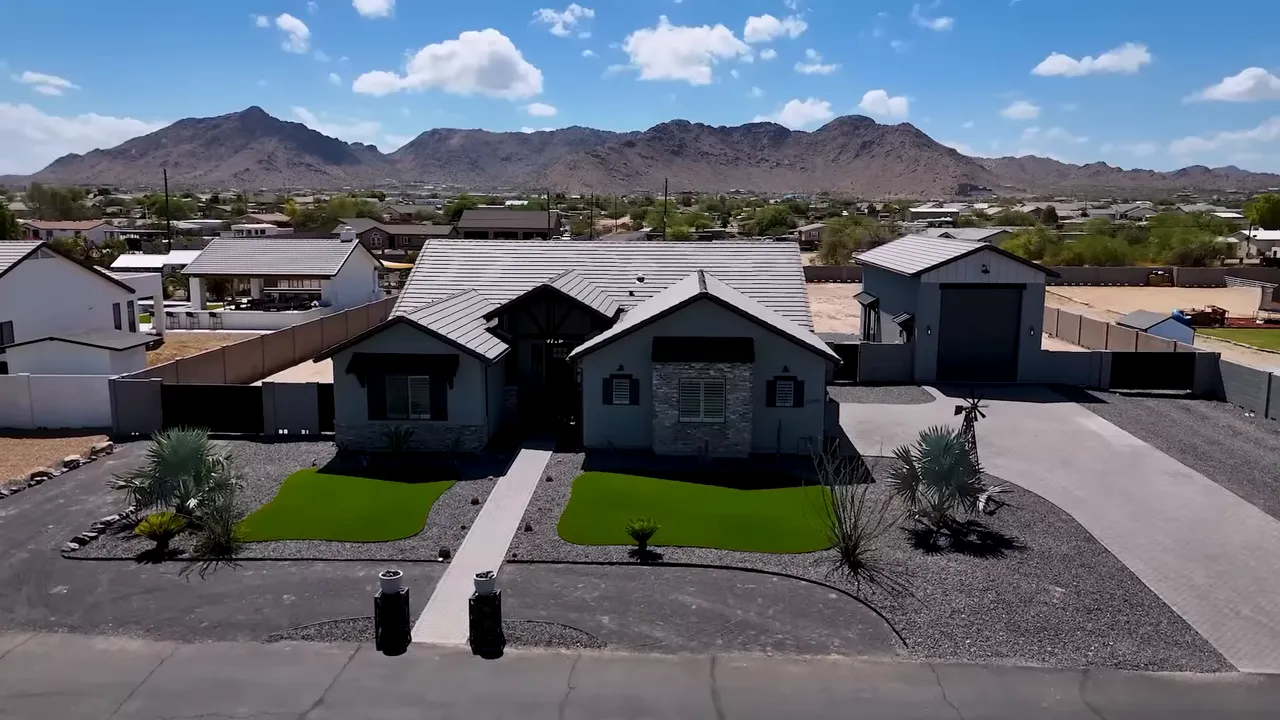
3. San Tan Valley, Arizona
San Tan Valley tells a slightly different story. Prices have not necessarily fallen off dramatically, but buyer behavior has shifted.
A few years ago, San Tan Valley was a go-to option for people who wanted to avoid intense bidding wars and maximize house size for their budget. That worked well when affordability was the main priority and traffic was less of a burden.
But as the Valley has grown, commuting has become a much bigger quality-of-life issue.
Today, many buyers who might have stretched into San Tan Valley are now looking harder at Queen Creek instead. Why? Because Queen Creek offers stronger infrastructure, better access to Chandler and downtown Phoenix, and a more favorable balance between location and lifestyle.
This is a classic example of buyers reprioritizing. At first, maximum square footage sounds great. Then real life takes over. Commute times matter. Access to healthcare matters. Daily convenience matters. A giant home loses some of its shine when getting everywhere feels like a project.
That is a major reason some outer-ring Phoenix neighborhoods and adjacent communities are cooling off. Buyers are no longer valuing size above all else.
4. Remote 55+ Communities
This is one of the most important shifts in the market right now, especially for retirees and snowbirds.
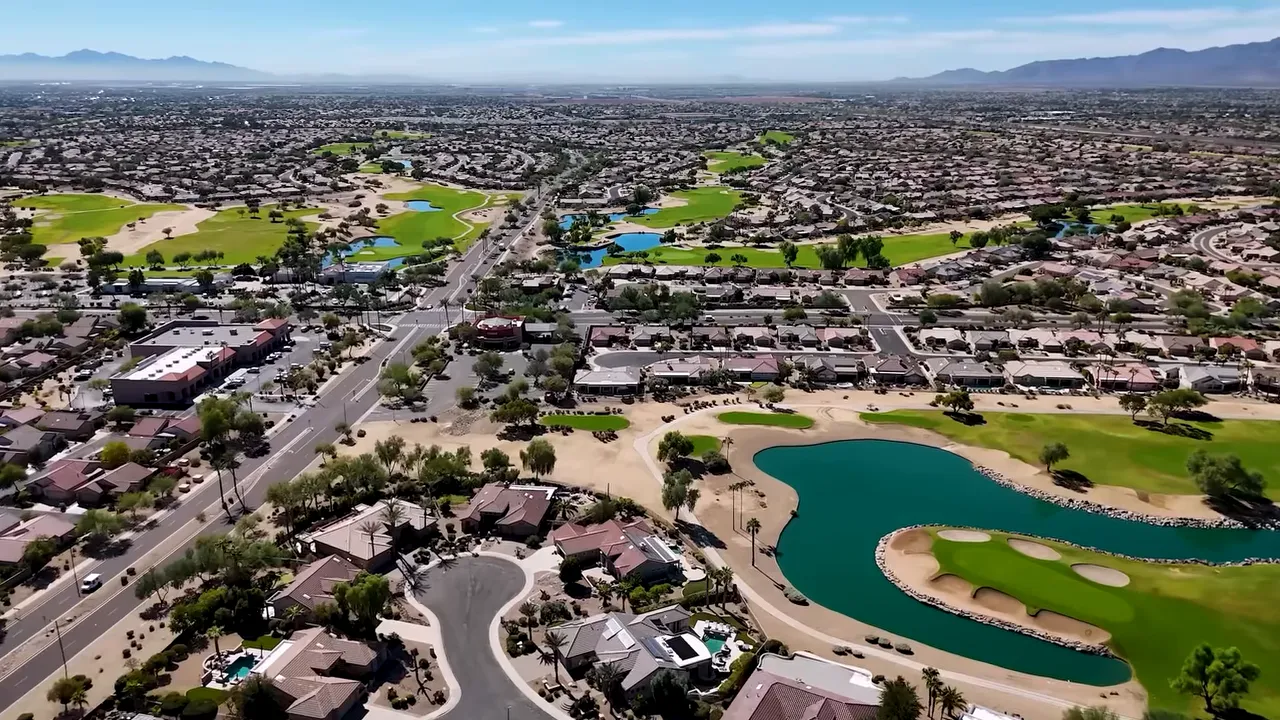
Not all 55+ communities are being treated equally. The ones struggling most tend to be the communities that are simply too far from the everyday conveniences retirees care about most.
Examples include communities such as:
- Sun City Festival in Buckeye
- Province in Maricopa
- Robson Ranch in Eloy
The issue here is not the concept of active adult living. It is the location within that concept.
Retirees tend to value predictability and convenience more than almost any other buyer group. If the grocery store is too far, if dining is limited, if medical care feels inconvenient, or if there is concern about what happens during an emergency, demand can soften quickly.
In this segment, homes often sit longest in places where buyers feel too isolated from the essentials. A beautiful clubhouse is nice. A golf course is nice. But if daily life includes long drives for basic needs, many retirees will choose an older but better-positioned community instead.
That creates opportunity for buyers who truly do not mind the distance. In some of these communities, there may be very strong deals available. But it also explains why these areas are cooling faster than better-located alternatives.
5. Areas with Heavy Construction
This one cuts across the entire metro and affects many Phoenix neighborhoods, not just one city.
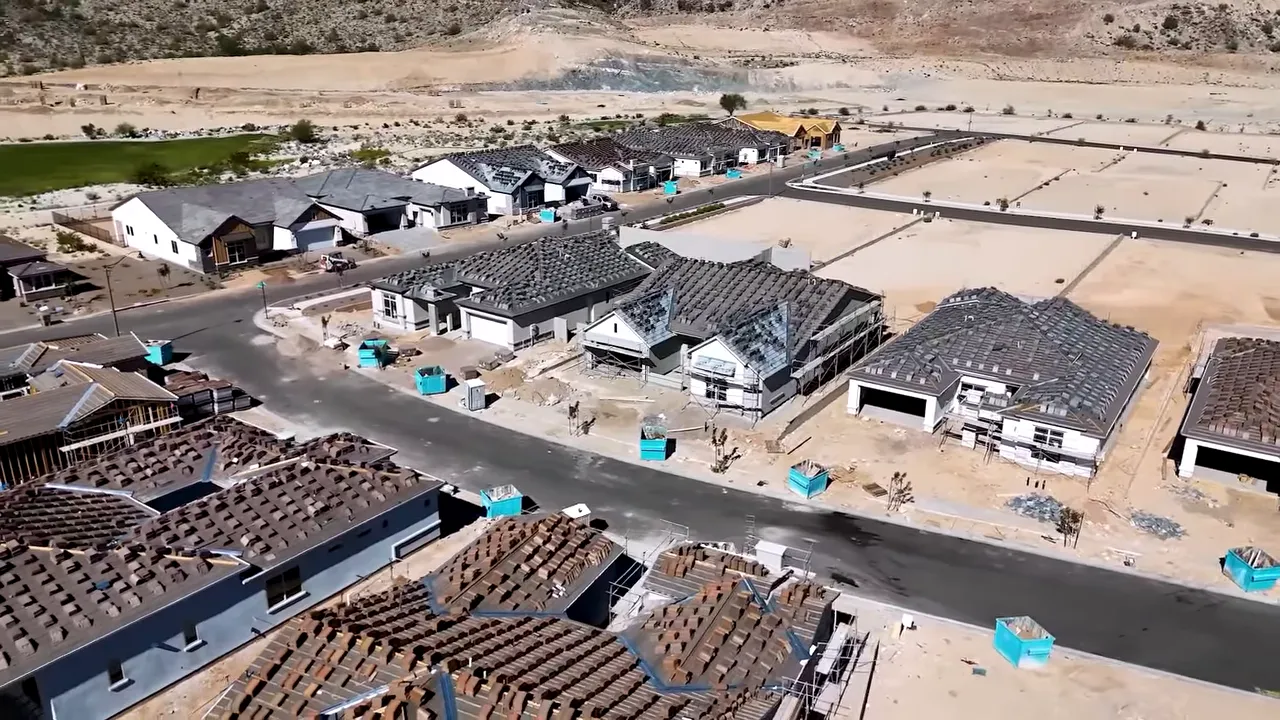
Anywhere there is a heavy concentration of new construction, resale sellers are under pressure.
The reason is simple. Builders are still offering incentives that materially improve the monthly payment. Interest rate buy-downs, closing cost assistance, and other concessions can make a brand-new home more attractive than a resale home at the same sticker price.
From the buyer's perspective, the math is obvious. If a new home saves several hundred dollars a month because of financing incentives, a 10-year-old resale home at the same price has to offer something compelling to compete.
That could be:
- A completed backyard
- Window treatments and post-build upgrades
- Better lot placement
- A sharper price
- More attractive terms
There was a real example of a nearly new resale home sitting on a street where the builder had five brand-new homes for sale at the same time. In a situation like that, the seller cannot just list and hope. The marketing, pricing, and positioning all have to be right. Otherwise, the listing can sit for months.
That is one reason some Phoenix neighborhoods feel softer than headline numbers suggest. If they are surrounded by builder inventory, resale competition becomes much tougher.
Where Phoenix Buyers Are Moving Instead
The good news for Phoenix is that people are not giving up on the metro. They are rotating toward areas that feel more balanced.
North Peoria and North Phoenix
These areas are attracting buyers who still want newer homes and thoughtful community planning, but without the same level of outer-edge tradeoff.
North Peoria and North Phoenix offer a solid mix of established neighborhoods, dining, shopping, and newer communities. There is room to spread out. The desert setting appeals to a lot of buyers. And there is enough new housing to create options without completely overwhelming the resale market.
Communities and submarkets that stand out here include:
- Vistancia
- Norterra
- Anthem
- Desert Ridge
The TSMC microchip plant also adds a major long-term growth factor to this part of the Valley, bringing thousands of high-paying jobs and reinforcing demand.
Queen Creek
Queen Creek has become a landing spot for buyers who want newer housing, family-oriented amenities, and a community feel without paying the larger premiums often found in Gilbert or Chandler.
It has especially strong appeal for buyers working in the Chandler and Tempe tech corridors who want a quieter home base. Better schools, entertainment, dining, and shopping all help support the area.
As some buyers rotate away from San Tan Valley, Queen Creek becomes the more sensible upgrade in terms of convenience and infrastructure.
Established 55 plus and country club communities
For the retirement and snowbird segment, the strongest demand is flowing into communities that are already proven.
That includes places like:
- Victory at Verrado
- PebbleCreek
- Trilogy at Vistancia
- North Scottsdale communities
These communities have several advantages. They are not extremely remote. Their amenities are established. Buyers know what the golf looks like, what the HOA structure looks like, and how the neighborhood is likely to feel over time.
That predictability matters. In softer markets, buyers often become more conservative. They lean toward places with a known identity rather than communities that still feel far out or unfinished.
What This Means for Phoenix Buyers in 2026
If you are buying in the current Phoenix market, leverage has returned, but not everywhere equally.
That is the key. Phoenix is not one giant market moving in one direction. It is a collection of micro-markets. Some Phoenix neighborhoods still hold pricing well. Others give buyers more room to negotiate on price, concessions, closing costs, or timing.
That means a smart buyer strategy should include:
- Comparing neighborhoods side by side, not just cities overall
- Negotiating the full package, not only the purchase price
- Studying nearby new construction to understand the real competition
- Thinking beyond square footage and focusing on daily routine
One of the biggest mistakes buyers make is assuming every part of Phoenix should be negotiated the same way. That is just not how this market works.
A neighborhood in Verrado can be performing completely differently than another Buckeye neighborhood just a few miles away. One area may support stronger pricing while another offers obvious buyer leverage. That is why local context matters so much.
What This Means for Phoenix Sellers in 2026
If you are selling, the first price matters more now than it did when the market was moving faster.
When buyers have options, overpricing does more than slow down your sale. It can position your home as the weaker choice from the beginning. Once that happens, the listing can become stale, and buyers start expecting even deeper discounts.
Right now, sellers need to be realistic about who they are actually competing with.
That is rarely all of Phoenix. More often, it is:
- The most similar nearby resale homes
- Any builder inventory in the same price range
- Competing homes offering better terms or stronger presentation
In many Phoenix neighborhoods, buyers are carefully comparing condition, cleanliness, upgrades, and monthly payment impact. The home that feels move-in ready, priced right, and easy to choose often wins even against similar floor plans.
For sellers near new construction, this is especially important. You need a reason for buyers to choose your home over a builder's offer. That might mean emphasizing a finished yard, premium upgrades, or the fact that the home is truly turnkey. It may also mean offering concessions of your own.
What no longer works consistently is assuming the market will bail out a weak strategy.
Are you a home buyer trying to find the right Phoenix neighborhood before you waste time? I can help you compare micro-markets, spot where buyers have leverage, and build a smart offer strategy for the area that fits your daily routine. Call or text 602-481-1561 to get started today.
Phoenix Housing Market FAQ
Are people really leaving Phoenix neighborhoods in large numbers?
Not Phoenix as a whole. What we are seeing is more of an internal rotation. Buyers and homeowners are moving away from certain pockets where the commute, convenience issues, or housing competition no longer feel worth the tradeoff.
Which Phoenix neighborhoods are cooling off the most?
The clearest softening is showing up in outer-edge markets and areas with heavy new construction pressure. Buckeye outside of Verrado, parts of Surprise, San Tan Valley, more remote 55+ communities, and neighborhoods surrounded by builder inventory are among the most notable examples.
Why is Buckeye cooling while Verrado still performs well?
Verrado offers a stronger lifestyle package with better amenities and a more distinct community feel. In many other parts of Buckeye, buyers face longer drives, fewer nearby conveniences, and much more competition from similar homes, especially new builds.
Why are some 55 plus communities slowing down?
Many retirees prioritize convenience, predictability, and quick access to healthcare, groceries, and dining. Communities that are too remote often lose momentum first when the market softens.
Where are buyers going instead of the cooling Phoenix neighborhoods?
North Peoria, North Phoenix, Queen Creek, and established 55+ or country club communities are attracting strong interest. Buyers are favoring places that offer a better balance of lifestyle, access, and resale stability.
Is new construction hurting resale homes in Phoenix neighborhoods?
Yes, in many cases. Builder incentives such as rate buy-downs and closing cost assistance can make new homes more appealing than resale properties at a similar price. That puts extra pressure on resale sellers to compete on pricing, presentation, and terms.
What should buyers focus on in this market?
Buyers should look at neighborhood-specific data, negotiate the full package rather than only price, and think carefully about daily routine. Commute times, amenities, and access to services matter just as much as the home itself.
What should sellers do if their home is in a softer area?
Sellers need to price accurately from the start, understand their real competition, and position the property to stand out. If new construction is nearby, highlighting completed upgrades and offering attractive terms can make a major difference.
The biggest takeaway is this: Phoenix neighborhoods are not moving in lockstep. Some are cooling quickly because buyers are no longer willing to accept the same compromises. Others are benefiting from that shift because they offer a better everyday lifestyle.
That is really what this market comes down to now. Not just price. Not just square footage. Not just whether a house is new. Buyers are making more practical decisions about how they want to live every single day.
And in this version of the market, the neighborhoods that make daily life easier are the ones winning.